Full-Stack Platform
TaskFlow
A robust, real-time task management platform built on the MERN stack and integrated with AI. Designed to handle complex workflows with a focus on speed, clarity, and visual minimalism.
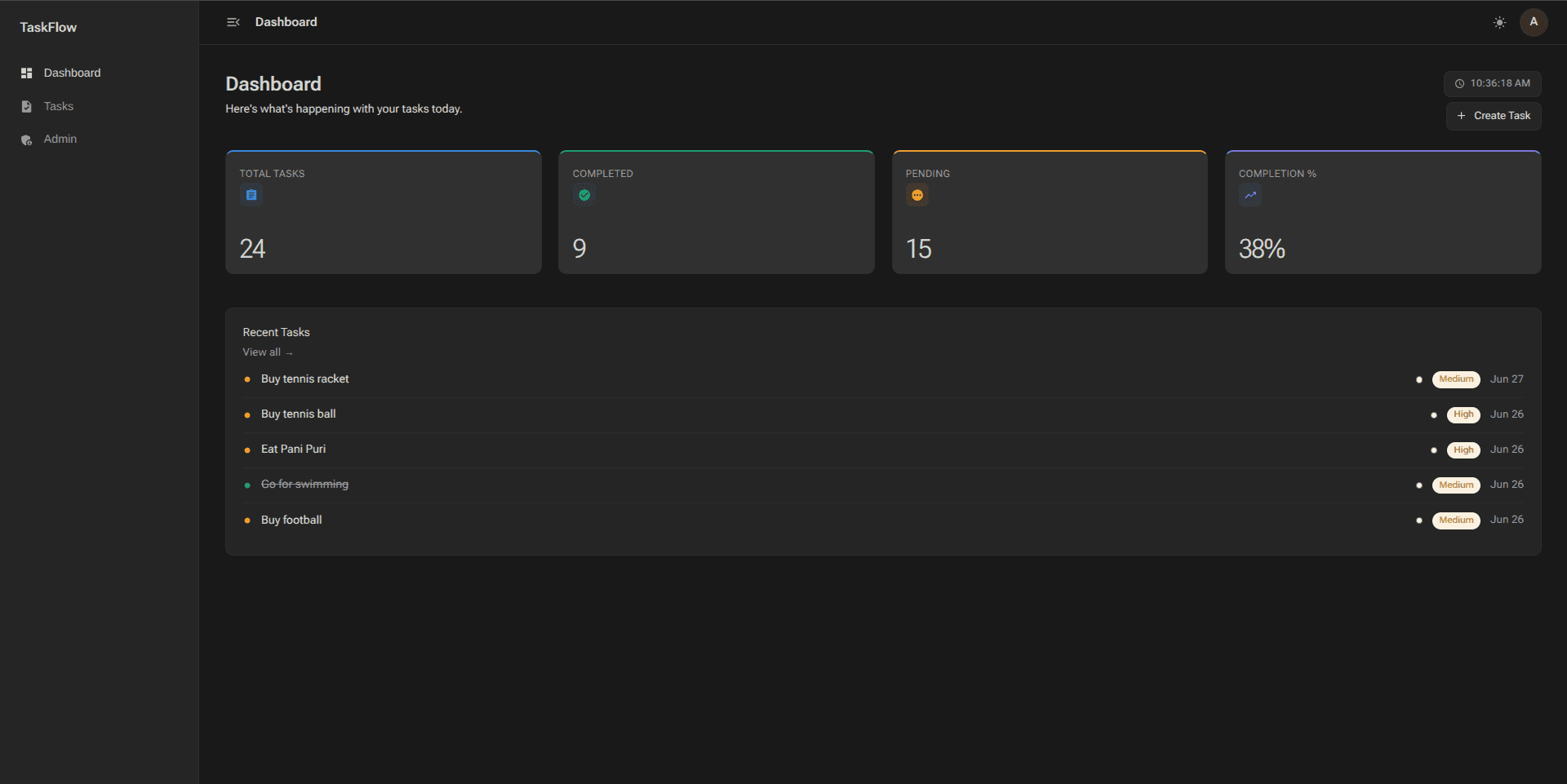
The Overview
TaskFlow was born as a weekend project. The goal was to create a platform that struck the perfect balance: powerful enough for engineering teams, yet intuitive enough for everyday personal use, at first it was just managing CRUD operations, but then I thought of integrating AI in it.
The application follows a modern full-stack architecture, emphasizing scalability, security, and user experience. From email verification and password recovery to an admin dashboard, automated reminder emails, and AI-powered natural language task creation using voice recognition, every feature is designed with real-world usability in mind. The interface embraces a premium dark-first aesthetic with thoughtful spacing, subtle animations, and responsive layouts, creating an experience that feels fast, intuitive, and polished across desktop and mobile devices.
Problem & Solution
The Problem: TaskFlow didn't begin as an attempt to reinvent task management—it started as a weekend project to build something complete from the ground up. I wanted a project that would push me beyond simple CRUD applications and challenge me to design a production-ready system involving authentication, email workflows, role-based access, dashboards, and scalable backend architecture. The goal wasn't to compete with established productivity tools, but to learn how they're built.
The Solution: Instead of focusing on feature quantity, I focused on building features the right way. Every addition—from secure authentication and OTP verification to admin management, reminder emails, and the upcoming AI-powered task creation—was implemented as if the application were intended for real users. TaskFlow has gradually evolved into a personal engineering playground where I can experiment with modern full-stack development while emphasizing clean architecture, thoughtful UI design, and production-ready practices.
Technical Architecture
The application leverages a standard MERN stack but introduces specific architectural decisions to ensure scalability and real-time synchronization across multiple clients.
Key Features
- AI-Powered Task Creation: It introduces Gemini Flask powered natural language task creation, allowing users to create structured tasks from plain English and by speaking also, alongside monitoring and alerting for AI service health.
- Automated Email Workflows: Integrated email verification, password recovery, and scheduled reminder emails for upcoming pending tasks using cron jobs and the Resend API.
- Performace & Security: Password hashing with bcrypt, request validation, rate limiting, Helmet security headers, centralized error handling, and automatic session invalidation for deleted users.
Future Iterations
While the core platform is robust, the roadmap includes native mobile application wrappers using React Native, offline-first capabilities utilizing Service Workers, and an AI-driven task prioritization engine.